Article by:
Retreat Finder

In a culture where personal transformation is often marketed through spa menus and urban wellness studios, a new kind of sacred space is emerging, one shaped not by design but by geology. Think open skies, sparse vegetation, shifting light, raw landscapes that ask nothing of us but attention. From high deserts to windswept plateaus, these environments interrupt routine and invite reflection.
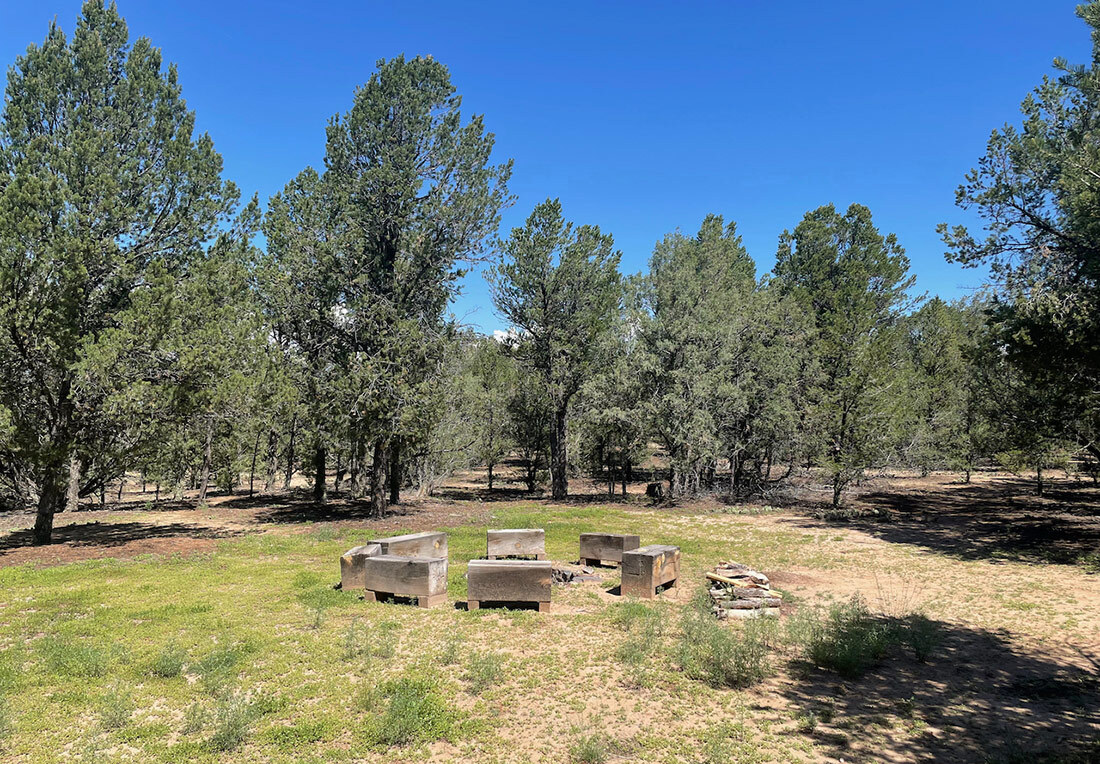 Remote, elemental settings often reveal what the noise of everyday life conceals. In these spaces, transformation doesn’t come from productivity or polished self-help. It comes through slowness, discomfort, and awe.
People are discovering that landscapes stripped to their essence offer clarity. Whether it's the vast skies of the Southwest, the stillness of a desert sunrise, or the texture of sandy soil underfoot, such spaces prompt a return to what’s elemental, both in nature and in self.
Traditional wellness environments are typically curated, temperature-controlled, sound-engineered, and meticulously scheduled. By contrast, these raw nature spaces are unpredictable and unpolished. And that’s precisely the point. In these landscapes, wind replaces white noise; the only structure is what you create for yourself. It’s less about being guided and more about learning to listen.
For many, this is the appeal. There’s no performance, no branding. Just the spaciousness to be alone with your rhythms, questions, and creative impulses.
These new sacred spaces attract a particular kind of seeker: someone in transition, someone who needs distance from the noise, someone whose questions no longer fit in a conventional container.
People come alone or in small, intentional groups. They bring journals, sketchbooks, musical instruments, or simply a readiness to walk, listen, and notice.
Sometimes, they come to grieve, sometimes to reset, and sometimes not knowing what they need, only that the place itself will help them figure it out.
.png)
What’s emerging is a new retreat model, not a spa escape or a productivity boot camp, but a place where people create their rituals, move at their own pace, and shape the container for their inner work.
Many venues in these regions are intentionally simple, from minimalist adobe dwellings to hand-built studios with sprung floors. They invite guests to engage with the land, not escape it. Paths replace pavement. Stars replace screens. Guests may be guided through movement, breathwork, or journaling, or simply sit in stillness.
 (1).jpg)
These landscapes are also rich with possibilities. Guests can stargaze in regions with no light pollution, walk among ancient petroglyphs, soak in mineral springs, or explore pueblos and artist towns.
Local practitioners often offer massage, sound healing, astrology, or ancestral practices for those seeking guidance. Others may have no plan, letting the land guide their days.
These raw landscapes offer a reset in a time marked by overstimulation and digital saturation. Their simplicity is not a lack; it’s an offering. They strip away the superfluous and ask us to meet ourselves again, outside of context, expectation, and urgency.
This isn’t about escape. It’s about reentry into the body, the senses, and a larger story held by the land.
While many locations across the American Southwest offer this kind of environment, one example is Vista Verde Retreat near Taos, New Mexico. Hand-built structures, trails through pinyon-juniper forest, and access to solitude and community reflect the possibilities available to seekers in these emerging sacred spaces.
But it's just one point on a broader map. These places are out there, waiting. Not to fix you, but to hold space while you listen.


 Log in with Google