
Article by:
Retreat Finder

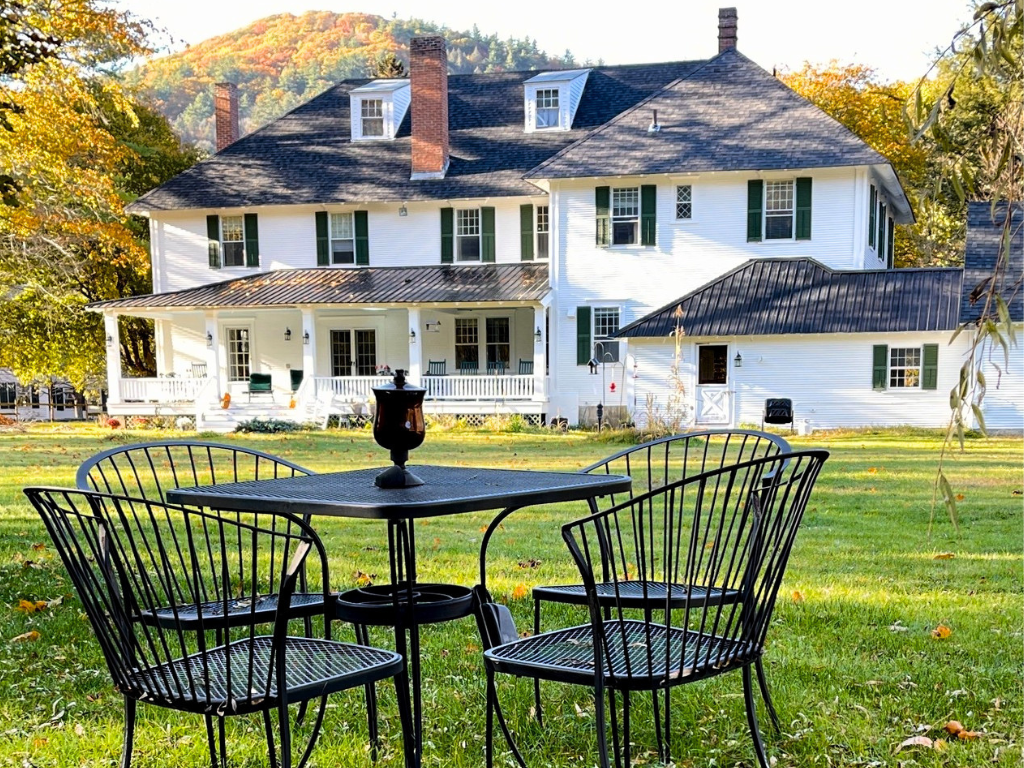
Planning a retreat? Retreat venues typically use two pricing models: whole property (group rental) or per-person pricing. Choosing the right one can significantly reduce your financial risk.
1. Group Rental (Whole Property Rental)
2. Per-Person Rental
Example breakdowns using real numbers from Willow Vermont Retreat are included below, so you can compare both models side by side.

Traditionally, retreat planning uses a fixed-cost model. The leader rents a venue, pays a deposit, commits to the total cost, and then starts selling spots.
This approach can work well for experienced leaders with a loyal audience, a proven offer, and a strong track record. But for newer leaders or anyone trying out a new retreat idea, the numbers can feel overwhelming.
With fixed venue costs, every empty room affects your bottom line. A retreat that works with 12 people might only break even with 9, which can shift your focus from building connections to just filling spots.
Flexible retreat venue pricing means any setup that gives leaders different ways to host, scale, or manage their financial commitments.
This doesn’t mean leaders only pay if people show up. Most venues still need deposits, minimums, and have cancellation rules. But flexible models match costs more closely to how many people actually attend.
The goal isn’t to remove all risk, but to make sure it’s clear, manageable, and fits the size of your retreat.
For retreat leaders, this clarity helps you move from just hoping for a full group to knowing exactly how many people you need for the retreat to work.

Looking at group rental and per-person rental models side by side is a good way to understand the risks involved with retreat venues.
A group rental model usually gives the leader more control. The leader manages registration, collects participant payments, sets pricing, and pays the venue according to the venue’s payment schedule.
This can create more income potential if the retreat fills, but it also means the leader carries more of the financial responsibility.
A per-person rental model usually shifts some of that structure. Instead of the leader paying one full venue amount regardless of attendance, the venue charges based on paying participants, often with a minimum number required.
In some cases, the venue also manages registration and collects room, board, and program fees directly from participants.
Neither model is automatically better. The right choice depends on your audience, how confident you are in registrations, how much control you want, and your comfort with risk.
.png)
Willow Vermont Retreat provides a practical example of flexible venue pricing in action.
Willow, one of the more thoughtfully designed Vermont retreats, is designed for intimate retreats and workshops.
In standard retreats, the property can accommodate up to 14 people across seven rooms: six bedrooms in the main house and a treehouse that sleeps up to two people in one queen bed.
Each main house bedroom has two beds and a dedicated bathroom; four rooms have en-suite baths, and two have dedicated hallway baths.
Meals are included in the retreat package. Ravi and the Willow team prepare dinner on arrival day, three meals on each full day, and brunch on departure day.
The food is centered on Indian and Indian-inspired vegetarian meals, with chicken or fish available for an additional charge.
The on-site studio accommodates up to 14 yoga mats and includes mats, cushions, straps, bolsters, blankets, a Sonos sound system, and a large flat-screen television.
For larger workshops, leaders may rent the neighboring 1865 schoolhouse for an additional charge; that space accommodates up to 18 yoga mats.
Willow also supports leaders with promotion. After booking, leaders are encouraged to begin advertising right away, and Willow can cross-post retreat content on its social media channels, which have a combined reach of approximately 10,000 viewers.
Programs may also be included in periodic Google Ads, third-party listings, and print campaigns.
For first-time retreat or workshop leaders at Willow, the venue also offers a complimentary stay for up to two nights before the program, after the deposit is made.
This gives leaders a chance to experience the property, plan in the space, and meet the Willow team before bringing participants.
For leaders focused on risk management, Willow’s two pricing options are especially important.
_1778096524.png)
In Willow’s Group Rental option, the retreat or workshop leader manages guest registrations directly.
Willow creates a webpage for the retreat or workshop, and that page links to the leader’s website or contact information so potential participants can inquire or register.
The leader controls the registration process and pays Willow for room and board.
This option covers room and board for up to 14 people, including participants, leaders, and any staff staying at Willow.
_1778096489.png)
Holiday retreats are priced 5% above standard weekends. Foliage season retreats are priced 20% above standard weekends.
Foliage season runs from Friday of the third weekend of September through Monday of the third weekend of October. Indigenous People’s Day falls within foliage season, so that weekend is priced 25% above standard weekends.
Option A is well-suited for leaders with an established audience, a proven offering, and confidence in filling the required spaces.
The primary advantage is control over pricing, registration, and participant communication.
The risk is that the venue cost is fixed.
For example, a 3-night standard weekend costs $8,400 before room and meals tax and any optional processing fees. If fewer participants register than expected, the leader is still responsible for the scheduled payments.
.png)
In Willow’s Per-Person Rental option, Willow manages guest registrations and collects room, board, and program fees from each paying participant.
This model reduces the risk of unfilled spaces most directly.
Instead of the leader paying one full group rental amount, pricing applies per paying participant.
Willow’s Option B has a minimum of 8 and a maximum of 12 paying participants. Up to two leaders or staff receive room and board at no additional cost.
.png)
The same seasonal adjustments apply: holidays are 5% higher, foliage season is 20% higher, and Indigenous People’s Day weekend is 25% higher than standard weekend pricing.
For a 3-night standard retreat, the room-and-board portion is $795 per paying participant before tax and any optional processing fees.
At 8 paying participants, that totals $6,360 in participant room-and-board charges. At 12 paying participants, it totals $9,540.
This model is especially helpful for leaders who prefer Willow to manage registration and payments, or who want costs to align closely with actual attendance.
There are still important details to plan for. The leader pays a $1,000 refundable deposit at booking.
Willow refunds this deposit in $125 credits for each of the first 8 participants who complete their scheduled payments. In Option B only, Willow also adds a 25% commission to the portion of program fees above $125 per person per night.
So Option B is not a no-risk model. It is a lower-administration, more participation-based model with clear minimums.
For many retreat leaders, this difference really matters.

Imagine you are planning a 3-night standard weekend retreat at Willow.
The main question isn’t just which option costs less.
A better question to ask is: Which model aligns with your ability to fill, manage, and financially support the retreat?”
For an established teacher with a strong email list and a retreat that reliably sells out, the group rental model may offer more control and more upside.
For newer leaders, those testing new formats, or anyone seeking less administrative responsibility, the per-person model may be more manageable.

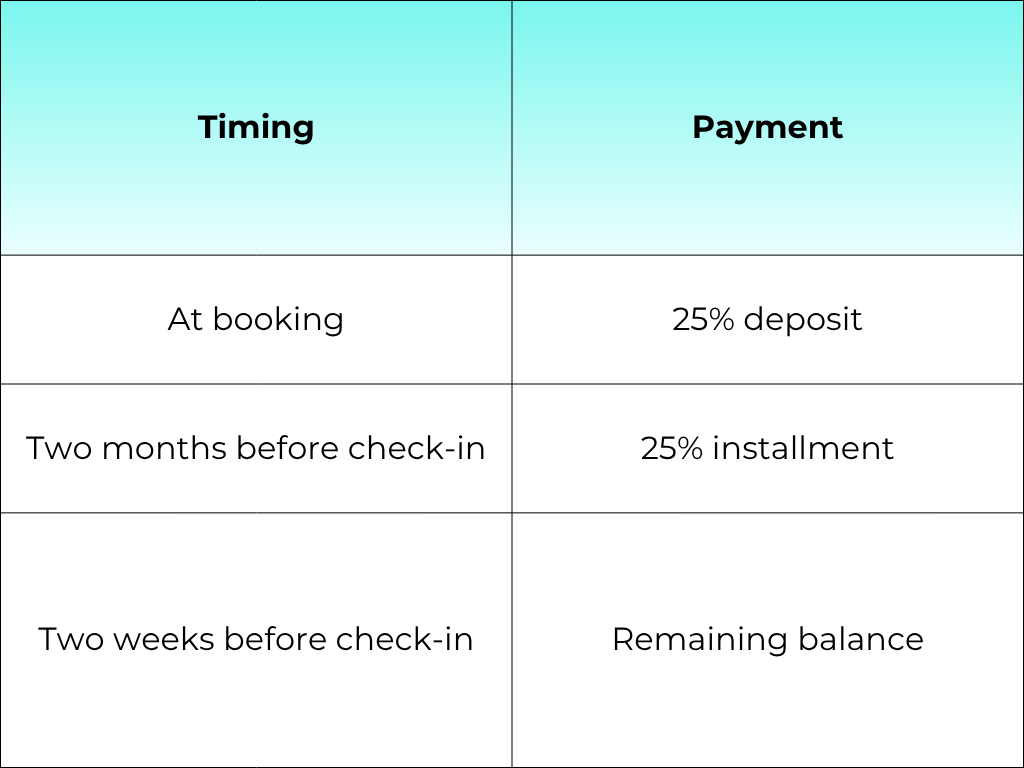
Pricing is just one part of your retreat budget. Timing is just as important.
A retreat might look profitable on paper, but still cause stress if you have to make big payments before you get money from participants. That’s why it’s important to check payment schedules before you sign a venue agreement.
.png)
This kind of schedule gives leaders a clearer map. They can plan their marketing timeline around actual payment deadlines instead of waiting until the final weeks to see whether the retreat is financially viable.

Cancellation policies might not be the most exciting part of planning a retreat, but they are one of the most important.
At Willow, cancellation terms differ depending on the pricing model.
For Group Rental, if the leader cancels within 24 hours of booking, Willow offers a 100% refund minus applicable credit card charges for both the deposit and the refund.
If the leader cancels at least 60 days before check-in, Willow offers a 50% refund. For later cancellations, Willow’s travel insurance partner, ResNexus, may offer partial to full refunds up to check-in day, but travel insurance must be purchased at booking. If Willow cancels, the refund is 100%.
For Per-Person Rental, the leader’s deposit is non-refundable if the leader cancels. If the leader cancels, participants receive a 100% refund.
If a participant cancels at least 60 days before check-in, the participant receives a 75% refund.
Late cancellations may be covered partially or fully through ResNexus travel insurance if purchased at booking. If Willow cancels, participants receive a 100% refund.
These details affect how you market, price, and talk with your participants. A clear cancellation policy protects everyone involved: the venue, the leader, and the guests.

Flexible venue pricing isn’t just about money. It can also make the whole retreat experience better.
When leaders aren’t stressed about filling every bed, they make better choices.
They can be more honest in their marketing, avoid taking participants who aren’t a good fit, and focus on building a connected group instead of just filling spots.
This is especially important for small retreats, where group chemistry is a big part of the experience.
A leader who feels financially secure has more energy to support the group. They’re less likely to show up exhausted from last-minute selling or to overload the schedule just to justify the price.
They can listen, adjust, and guide the group more effectively.
Participants might not know the details of your pricing model, but they can usually feel its effects. A calm leader helps create a more supportive retreat environment.

Before signing a venue agreement, retreat leaders should ask practical questions about the financial structure:
These questions might not be as fun as picking themes or menus, but they help make sure the creative parts of your retreat can happen without extra stress.

There isn’t one perfect pricing model for every retreat leader.
For many leaders, the best approach is to match the venue model to where your retreat is in its development. A first-time retreat may benefit from a structured or per-person arrangement.
An established annual retreat with a loyal following may be suited to a full-property rental. Smaller, high-touch workshops may require different financial models than larger destination retreats.
The best venue setup supports both your vision and your well-being as a leader.

A retreat can be life-changing without taking on unnecessary financial risk. The best retreats have clear structures: clear pricing, payment timelines, cancellation terms, and expectations between the leader, venue, and participants.
Flexible venue pricing helps leaders plan realistically, know their break-even point, choose the right group size, and worry less about empty spots.
_1778097080.png)
Willow Vermont Retreat’s two-model structure is one example of how this can work. Leaders can choose a group rental model when they want more control and are ready to manage registrations themselves.
Or they can choose a per-person model that allows Willow to handle guest registration and payment collection while tying room-and-board costs more directly to participation.
For retreat leaders, this flexibility can mean the difference between forcing a retreat to work and building a sustainable program from the start.
Before you book your next retreat venue, think about the pricing model as well as the setting.
The right setup protects your budget, saves your energy, and helps you give participants a great experience.


 Log in with Google