
Article by:
Troy Keller

There are a few things in life that slow us down the way fly fishing does.
It’s not an experience you rush through. You can’t force it. You can’t scroll past it. And maybe that’s the magic—because in the rhythm of the cast, in the hush of the water, something inside shifts.
Something softens.
Something settles.
Fly fishing isn’t just a sport. For many, it’s a moving meditation. A way to return to your body, root into presence, and re-enter a relationship with the natural world. It’s as much about what happens in the water as what happens within.
Fly fishing is a form of angling built on finesse rather than force.
Instead of casting out a heavy lure, you use a near-weightless artificial fly, designed to mimic the subtle movement of insects on or just below the surface. The fish, most often trout, aren’t fooled by flash or noise. They respond to precision, patience, and timing.
That makes fly fishing unique: you’re part of every moment. You don’t cast and wait. You engage—reading the current, choosing the right fly, adjusting your technique, refining your feel.
And in doing so, you step out of autopilot. You stop thinking about what’s next and start noticing what’s here.
Fly fishing embodies the same qualities that make retreats transformative. It’s not just about casting a line—it’s about how you show up in the moment.
Presence. You can’t force a fish to bite. You can’t muscle your way through a cast. You slow down, breathe, and meet the river as it is.
Mindfulness. Every movement is deliberate. You’re reading the water, watching the light, adjusting your line. Distraction fades. Attention deepens.
Surrender. You do your part, but the rest is up to the river. You learn to let go, to trust the flow, and to find peace in the not-knowing.
On retreat, fly fishing becomes more than recreation. It becomes a mirror, reflecting how we approach challenge, patience, control, and connection. It's not just about catching something. It's about what you're willing to release.

There’s a misconception that fly fishing is only for the experienced or elite. But it’s one of the most beginner-friendly outdoor activities when paired with guidance.
On retreat, participants often have the option to:
These options make it welcoming to total beginners while still deeply satisfying for seasoned anglers.
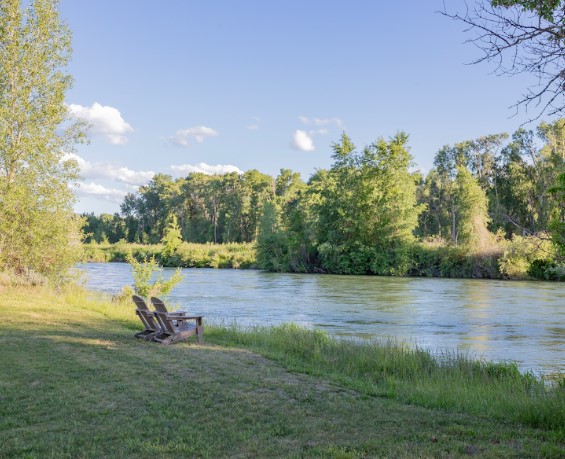
Yes, there’s a thrill to seeing a trout rise and take your fly. Yes, landing a fish you fooled with nothing but instinct and imitation feels amazing.
But the heart of fly fishing lies in everything around that moment.
The sunrise on the water.
The rhythm of cast and retrieve.
The stillness between drifts.
The way your mind goes quiet without you trying.
And when you're on retreat—already unplugged from your regular pace—those moments land even deeper.
Fly fishing may start as a quiet activity, but leaves a lasting imprint.
It teaches you to focus without force, move with intention, and trust what you can’t control.
And in the spaces between each cast, something deeper rises:
A sense of calm.
A return to rhythm.
A reconnection with yourself.
Because in the stillness, you don’t just find peace.
You find clarity.
And that’s the point.



 Log in with Google