
Article by:
Ask Nebula

The modern push to succeed puts a lot of pressure on you, so you can feel stuck without being unhappy. Usual routines keep moving. There’s work, messages, errands, and plans, but somewhere underneath it all is a persistent sense that you need to pause.
A spiritual awakening retreat can help you test beliefs, reconnect with your true self, and find answers to questions that rarely fit into a busy schedule.
The right timing for that experience is deeply personal, so there is no perfect moment to wait for. Still, the 10 signs below can help you tell whether you’re ready to embrace a new version of yourself.
You have started asking questions that don’t have easy, practical answers. What do I really want? Why do the same patterns keep repeating? What gives my life meaning?
That curiosity is often the first indicator of readiness for a more intentional life. Don’t think you need to have a spiritual belief system or a clear goal to start. The genuine interest in your inner changes is already enough.
A retreat offers time and space to reflect on what matters most to you through tools such as meditation, journaling, movement, or guided practices.
You might notice a song appearing at just the right moment, the same number surfacing on buildings, cars, and bills, or a dream that stays with you for days.
You may find yourself looking into symbolism and spiritual traditions, perhaps even to trace the deeper feelings behind strange coincidences. When these moments start piling up, many people look for a framework to make sense of them, whether that's numerology, tarot, astrology, or dream symbolism. Some prefer to work through it with another person rather than a search engine.
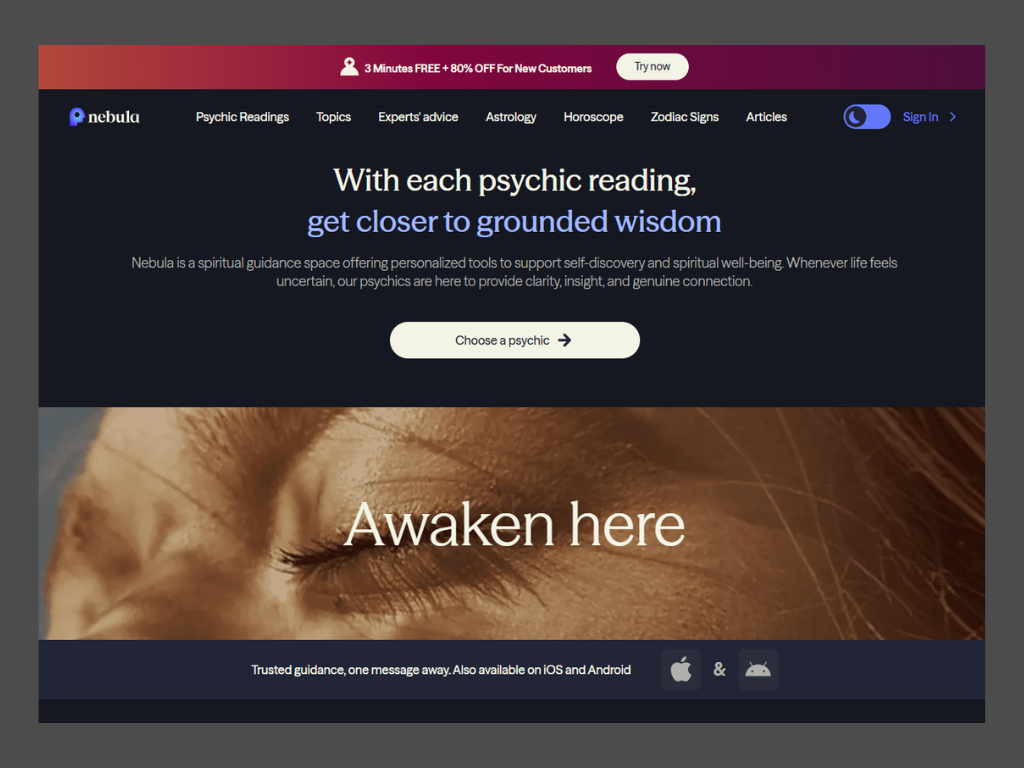
If you would rather talk it through with someone than sit alone with ChatGPT, apps like Nebula connect you with real astrologers, tarot readers, and other advisors for one-on-one sessions. The useful ones won't hand you a fixed answer about what a sign means.
They'll ask why that particular sign got your attention. So the next time you want to dig deeper, ask Nebula to help you explore what the moment stirs up in you rather than just decode a hidden message.
This doesn't mean reading every strange event as a supernatural message. Instead, pay attention to what it brings up in you. Sometimes the reaction matters more than the symbol itself.
You may have noticed that your body often reacts to stress before you fully recognize what you’re feeling: a difficult conversation can leave you with tension; overstimulation can drain your energy; meditation or spending time outdoors may help soothe your heated mind and ground you again. These physical responses indicate useful patterns in how your emotions affect you.
Some traditions take these ideas further and assign specific meanings to specific sensations. Ears come up often, since they're associated with receiving information, both the kind you hear and the kind you sense.
That's why discomfort on the left side gets interpreted the way it does. For instance, interpretations of the left ear pain spiritual meaning tend to point toward intuition you've been overriding or emotional information you've been tuning out.
These are interpretations, not diagnoses. Ear pain that persists, worsens, or comes with hearing changes needs a doctor's care, and no symbolic reading can substitute for that.
What's worth keeping from the spiritual framing is narrower: noticing what was going on in your life when a physical sensation showed up is a reasonable prompt for self-reflection.
Nothing is necessarily wrong. Your job is fine, your relationships are stable, and your schedule works. Yet the same thought of ‘Is this all I want?’ follows you all the time.
It can hit hard precisely because there may be no obvious problem to fix. A retreat creates distance from the routine, making it easier to see which commitments still deliver and which ones you’re maintaining simply out of habit.
Though spending time with friends and family is enjoyable for you, you've recently felt a craving for stillness. You want coffee without checking your chats. A walk without a podcast in your AirPods. An evening when nobody needs an answer from you.
That’s different from loneliness. Intentional solitude can help you hear thoughts that constant stimulation keeps buried. Retreat settings often provide that rare combination of privacy and structure, such as in silent retreats.
Maybe you've always been the responsible person, the people-pleaser, or one who never says no. Now the role feels restrictive.
Spiritual growth often starts with questioning identities that once seemed permanent. Day-to-day journaling or guided retreat exercises at a spiritual retreat can invite you to examine where those identities came from and which parts still belong in your life.
You may have started seeing a difference you’ve ignored until now: between what looks sensible on paper and what your gut feelings tell you.
Silent walks and reflective writing sessions in the retreat program can help you watch your reactions before converting them into decisions. Over time, you may develop an ability to separate intuition from anxiety, impulse, or someone’s expectations.
A meaningful retreat isn’t always relaxing. Honest reflection can excavate difficult memories or painful realizations hard to process. If you’re prepared to sit with uncertainty for a while instead of demanding answers, you’re more likely to benefit from the practices offered.
You don’t need to arrive already changed. All you need is enough openness to let the experience challenge some of your assumptions.
Sometimes the signs are surprisingly practical. You've been working nonstop, your attention feels scattered, and weekends disappear into chores while vacations still leave you checking email.
Your mind requires a change of pace. A retreat can interrupt that cycle for a few days. Waking up somewhere unfamiliar, following a slower schedule, and spending time away from notifications can restore perspective in ways another busy weekend may not.
This may be the strongest sign of all. If you’re seeking a retreat just for three days of stillness, that’s perfectly valid. But if you hope to return with a clearer sense of what to change, you’re approaching the experience differently.
The spiritual awakening retreat itself is only part of the process. Its value often becomes visible afterward - in the boundary you finally set, the habit you abandon, the conversation you stop postponing, or the decision you make with greater confidence.

 Log in with Google